


Alabaster Wall Sconce with Brass Frame: Size and Placement Guide
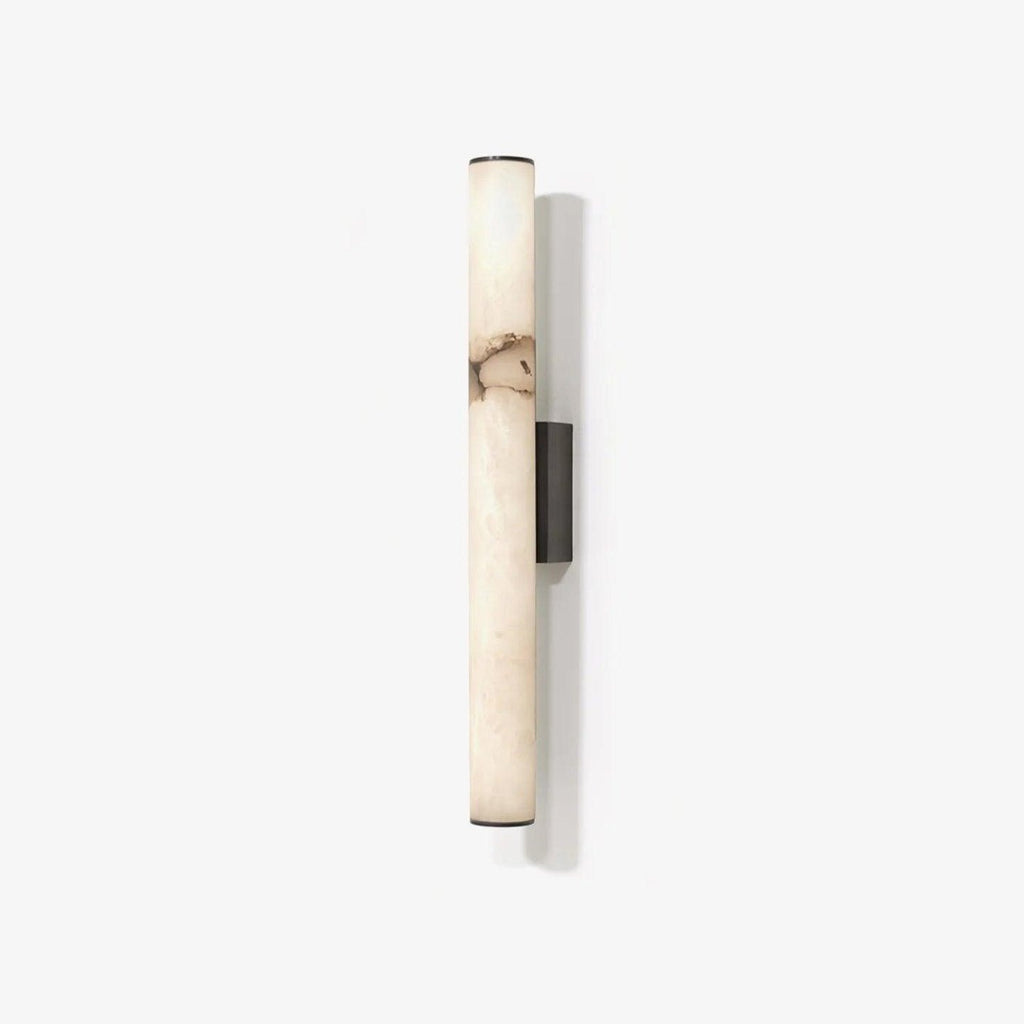
A wall sconce is the cheapest way to change how a room feels at night — and the easiest to get wrong. Hung too low it lights the floor; hung too high it washes the ceiling; a shade that is too opaque turns a $270 fixture into a glowing white pill on the wall.
The Callisto wall lamp from LampCozy is a hardwired sconce built around two materials that solve most of those problems: a natural alabaster stone plaster shade that diffuses light instead of blocking it, and a brass frame that gives the fixture a visible vertical line on the wall. It is designed for bedrooms, hallways, living rooms, and hotel-style corridors — places where you want ambient light at eye level rather than a bright pool on a table.
This guide covers what the materials actually mean in a room, how the three available heights change where you can use it, and the numbers worth taping to the wall before you drill.
What the Callisto sconce is — and what it is not
At a glance, the fixture is a slim vertical bar with an integrated LED light source inside an alabaster shade. There is no bulb to buy, no visible filament, and no lamp shade to replace. The light comes out through the stone, so the glow is soft and even rather than directional.
Key facts, straight from the product listing:
- Materials: brass frame with an alabaster stone plaster shade
- Light source: integrated LED, non-replaceable
- Color temperature: selectable — 3000K, 4000K, or 6000K
- Voltage: AC 110–240V
- Mounting: hardwired, wall-mounted
- Rating: IP20, damp-rated for indoor use
- Finishes: brass frame or black frame, both with a white shade
- Certifications listed: UL, ETL, CE, SAA, plus RoHS and FCC compliance
Two honest caveats. First, because alabaster is a natural material, the veining and translucency vary from piece to piece — two sconces from the same order will not be identical twins, and the listing notes that a splicing process may be used to reach longer lengths. Second, this is an indoor fixture rated IP20: it is fine in a hallway or a bedroom, but it is not built for steam, so a shower wall is the wrong place for it.

Why alabaster and brass work together
Most wall sconces use either fabric, glass, or metal. Each has a trade-off. Fabric softens light but yellows and collects dust. Clear glass throws a hard edge and shows the bulb. Solid metal is a sculpture, not a light.
Alabaster sits in a useful middle. It is dense enough to hide the LED board completely, and translucent enough that the whole shade becomes the light source. In practice that means:
- No glare point. You never see a bright dot, which is why it works at eye level in a hallway.
- Even vertical glow. Light spreads along the full height of the shade, so a 50 cm sconce reads as a 50 cm line of light.
- Natural texture. The veining stays visible when the lamp is on, so the fixture reads as stone rather than plastic.
The brass frame does a quieter job: it defines the edges. On a dark or heavily textured wall, a shade alone can look like a smear. A thin metal edge gives the eye something to focus on and makes the fixture look deliberate.
If your room is warm-toned — oak floors, cream walls, tan leather — the brass version sits naturally. If your palette is cooler or more minimal — grey walls, black hardware, matte white — the black frame version keeps the same shape with less warmth.
3000K, 4000K, or 6000K: which setting to actually use
The Callisto is switchable between three color temperatures, which is more useful than it sounds. The right setting depends on the room, not on preference alone. As a working rule:
| Setting | Character | Best used for |
|---|---|---|
| 3000K | Warm, amber-leaning | Bedside, bedroom walls, evening hallway |
| 4000K | Neutral, closest to daylight white | Hallways used during the day, stairwells, bathrooms-adjacent vanity areas, home offices |
| 6000K | Cool, slightly blue | Utility corridors, garages-adjacent entries, spaces that need a crisp white read |
One note for bedrooms: if you plan to use the sconce as reading light, 3000K at a low output is comfortable but not task-grade. These are ambient fixtures — the light escapes through stone, so it lands softly. For reading in bed, they work best in pairs or combined with a downward task light.
Sizes: 50 cm, 60 cm, or 80 cm
Three heights are offered, and the choice is mostly about wall proportion rather than room size. The brass versions are slightly wider in diameter (8 cm) than the black versions (6 cm).
| Finish | Dimensions | Power | Where it fits |
|---|---|---|---|
| Brass & White | Dia 8 cm × H 50 cm (3.1″ × 19.7″) | ~8W | Bedside flanking, powder-room mirror, narrow wall strips |
| Black & White | Dia 6 cm × H 50 cm (2.4″ × 19.7″) | ~8W | Same as above, for cooler or monochrome palettes |
| Brass or Black | H 60 cm (22.6″) | ~10W | The default for hallways and stairwells with standard 8–9 ft ceilings |
| Brass or Black | H 80 cm (31.5″) | ~20W | Double-height entries, long corridors, tall bedroom walls, hotel-style feature walls |
A quick proportion test: the sconce should occupy roughly one-third to one-half of the open wall height above the furniture or wainscot it hangs over. On a standard 8 ft wall with a nightstand, a 50 cm unit leaves generous breathing room; on a 12 ft entry wall, an 80 cm unit keeps the fixture from looking like a stamp.

Placement: heights, spacing, and the rooms worth doing
These are starting numbers based on standard US residential practice. Adjust for ceiling height, furniture, and how tall the people using the room are — the point is to end up near eye level, not to hit a number exactly.
Bedroom, flanking the bed
- Height: 48–60 inches from floor to the center of the fixture, or roughly 20–24 inches above the nightstand top.
- Spacing: center the sconce over each nightstand, typically 10–14 inches from the edge of the mattress.
- Notes: the 50 cm size is the natural pick here. Two units give you symmetric light and free up nightstand space — the listing offers a Set of 2 option where both lamps ship together.
Hallway and corridor
- Height: 60–66 inches to center for a standard 8–9 ft ceiling; higher only if the ceiling is unusually tall.
- Spacing: 8–10 ft between fixtures on long runs, and keep at least 3 ft from a corner so the glow does not crowd the wall edge.
- Notes: the 60 cm size reads well here. If the hallway is narrow, the 6 cm black version intrudes less into the walkway than the 8 cm brass one.
Living room and fireplace walls
- Height: 60–66 inches to center, or aligned with the top third of a mantel.
- Spacing: if you are flanking art or a mirror, keep 24–30 inches between the two fixtures for a 30–36 inch wide piece.
- Notes: pair them. A single vertical sconce on a wide living room wall tends to look accidental.
Stairwells
Mount sconces parallel to the stair angle rather than dead vertical if your stair is steep, and hold the same distance above the tread line on each flight. This is the one place where matching the architecture matters more than matching a fixed height number.

Installation: what you need before the box arrives
The Callisto is hardwired, not plug-in. That single fact decides whether this is a 20-minute job or a weekend project.
- You need a wall junction box at each sconce location, wired to a switch. If there is no box, you are hiring an electrician or running surface conduit — budget for that before ordering.
- Switching: the fixture is compatible with push switches, which are not included. If you want the sconces on a dimmer, confirm dimming compatibility with support first — the listing specifies push-switch control, not dimming.
- Voltage: AC 110–240V, so it works on standard US 120V circuits.
- Two-lamp walls: wire both fixtures to the same switch if you want them to act as a pair. Wiring them to separate switches gives you the option of lighting one side only.
- Order of work: tape the intended position on the wall, stand back, check it from the doorway, then cut. Sconces are far more sensitive to height than ceiling fixtures, because you see them at eye level every day.
How it compares to other wall lighting options
| Option | Strength | Trade-off |
|---|---|---|
| Callisto alabaster sconce | Soft, glare-free ambient light with a stone texture; no bulb replacement | Requires hardwiring; LED is non-replaceable |
| Plug-in sconce | No electrician needed, renter-friendly | Visible cord, unless you hide it with a cord cover |
| Table lamp | Cheapest, movable, easy to swap | Consumes surface space; light sits below eye level |
| Recessed downlight | Even general lighting, disappears into the ceiling | Harsh from below, no decorative presence on the wall |
Where the Callisto earns its price is the combination of a genuine stone shade with a brass frame at a size tall enough to read as architecture. If you want the look without the electrician, a plug-in sconce is the pragmatic alternative — but you will be looking at a cord.

Pre-order checklist
Run through this before ordering — most disappointment with hardwired fixtures comes from a missing junction box or a height that looked different on paper than in the room.
- Measure floor-to-ceiling height and the wall width you plan to fill.
- Confirm a junction box exists at each location, and that it is switched.
- Decide brass or black based on your existing hardware and wall tone.
- Pick 50 cm for bedside, 60 cm for standard hallways, 80 cm for tall or double-height walls.
- If you are doing a pair, order the Set of 2 so both lamps arrive together — and expect slight variation in the alabaster veining, which is normal for the material.
- Plan your color temperature room by room: 3000K for bedrooms, 4000K for circulation, 6000K only where you want a crisp white.
Frequently asked questions
Is the LED replaceable?
No. The light source is an integrated LED and is non-replaceable by design. The listing describes it as built for long-lasting performance, so plan on the fixture lasting as a unit rather than swapping a bulb.
Can the wall sconce be dimmed?
The listing specifies compatibility with push switches (not included) and does not state a dimming rating. If dimming matters for your bedroom or hallway, confirm with LampCozy support before ordering.
Can I install it in a bathroom?
The fixture is IP20 damp-rated for indoor use, and the listing explicitly notes it is not designed for high-moisture areas such as bathrooms. A powder room with good ventilation is a different case from a shower wall — keep it out of direct steam either way.
What does "Set of 2" mean?
It means the order contains two individual lamps, packaged together — not one lamp with two shades. Useful for bedside pairs and hallway runs.
Will two lamps look identical?
Not exactly. Alabaster is a natural material, so veining and translucency vary from piece to piece, and the listing notes that splicing may be used to achieve longer shade lengths. Treat variation as a property of the material rather than a defect.
Which size should I choose for an 8-foot ceiling?
For a bedside or narrow wall, 50 cm. For a hallway with a standard 8–9 ft ceiling, 60 cm at 60–66 inches to center is the safest proportion. Reserve the 80 cm for walls with more height to fill.
Ready to pick a finish and height? View the Callisto alabaster wall sconce in brass or black, in 50, 60, and 80 cm.


