The No-Stress Guide to Sizing and Hanging Your Dining Room Chandelier

The No-Stress Guide to Sizing and Hanging Your Dining Room Chandelier
We have all seen it: a stunning dining room completely ruined by a lighting fixture that is either way too massive or awkwardly tiny. Scale and proportion can make or break your space, but figuring out the exact math for a chandelier usually leads to a lot of second-guessing.
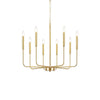
It does not have to be complicated. Whether you are hanging a vintage-inspired brass pendant or a sleek modern linear light, here is the cheat sheet designers actually use to get it right every single time.
Rule 1: The Room Math (For Diameter)
If you want to know the ideal width of your chandelier based on the room itself, grab a measuring tape. Measure your room's length and width in feet, and add those two numbers together. That sum is your ideal chandelier diameter in inches.
Example: Your dining room is 12 feet by 14 feet. 12 + 14 = 26. You should be looking for a chandelier roughly 26 inches wide.
Rule 2: The Table Math (The Safer Bet)
If your dining room is an open-concept space, the room math will not work perfectly. Instead, base the size on your dining table. Your fixture's diameter should be between one-half and two-thirds the width of your table. Most importantly, leave at least 12 inches of clearance on all sides of the table so no one bumps their head when standing up.
Rule 3: The Hanging Height
How low is too low? The golden rule is to leave 30 to 36 inches of space between the top of your dining table and the bottom of the fixture. If you have ceilings higher than 8 feet, add 3 inches of hanging height for every extra foot of ceiling space.
Pro Tip
Always put your dining room chandelier on a dimmer switch. The bright light you need for a family game night is very different from the soft, ambient glow you want for an intimate, romantic dinner.
Looking for the perfect centerpiece for your next dinner party?
Explore Luxury Chandeliers